
Home Page
Savings
maxill has been very successful by offering the highest possible quality product at the best price. We sell all of our own products, thus eliminating the cost and burden of "middle-man" distributors.

Reliability
maxill has a fully stocked warehouse in Tsuen Wan to make sure you have the supplies you need. maxill's order turnaround is one to two days and our backorder rate is also among the lowest in the industry.

Quality
Our unique maxill branded products are quality guaranteed.
- Quality Products
- Quality Service
- Customer Satisfaction


Recent Blog Posts
-
Posted: October 19, 2026
 Read more »
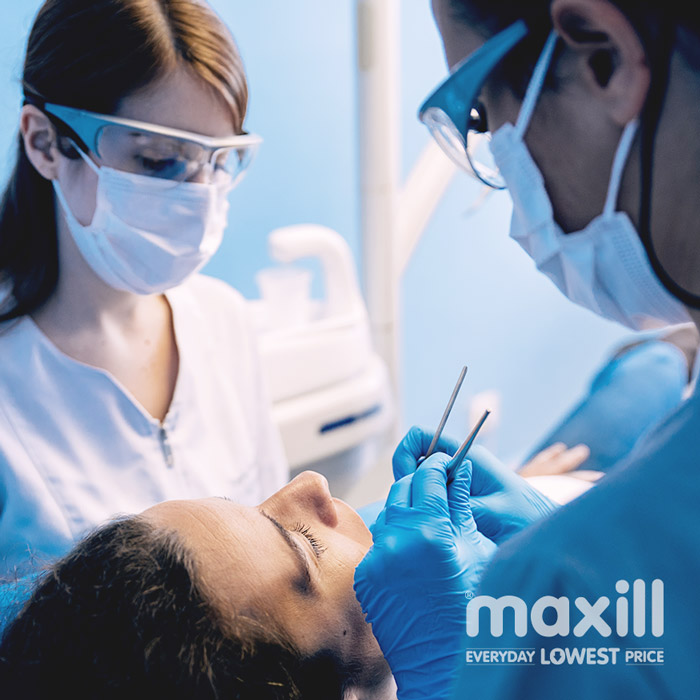
Silver diamine fluoride (SDF) is an effective, minimally invasive option for managing active carious lesions. It is simple to apply, requires relatively little chairside time, and can be especially valuable when conventional restorative care is difficult, delayed or not immediately feasible. Evidence-based clinical guidance supports 38% SDF as a nonrestorative treatment option for appropriate carious lesions. (Slayton et al., 2018)
Yet SDF still appears to be under-integrated into routine clinical care.
The bigger question may no longer be:
“Does SDF work?”
It may be:
“Are we identifying the right clients for it?”
That is why SDF should begin with caries risk assessment — not with the bottle.
SCREEN. DISPENSE. ISOLATE. APPLY. PROTECT.

-
Posted: August 26, 2026
 Read more »
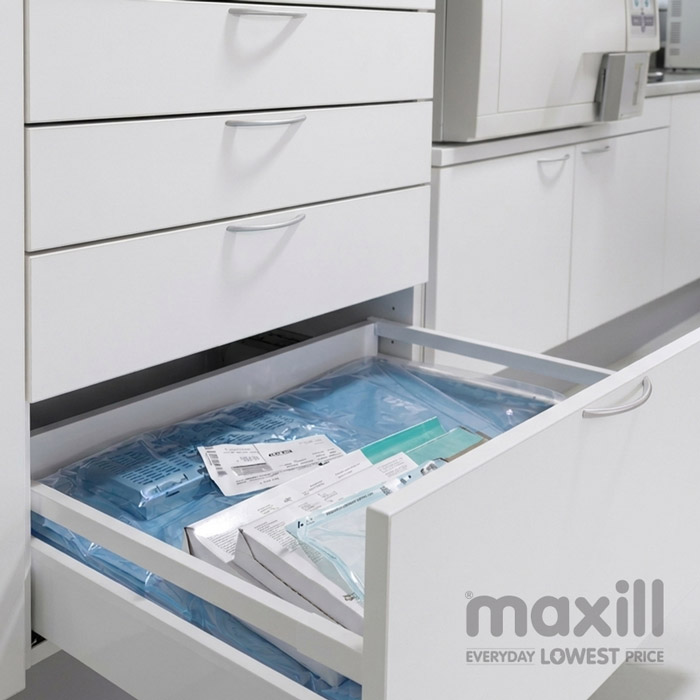
If you’ve ever walked into a sterilization area or supply room and noticed sterile instruments stored in the lowest drawer, bottom cabinet, or on a shelf near the floor, you’re not alone. This is one of the most common “it seems fine” storage habits in dental settings, especially when space is tight.
But here’s the truth… storing sterile instruments at ground level increases risk, even if the instruments are wrapped, even if they’re in a closed drawer, and even if they “aren’t technically touching the floor.” This isn’t just a rule for the sake of rules. It’s a practical, evidence-based risk reduction control that protects sterility, improves workflow, and reduces avoidable reprocessing. Let’s break it down.
The Simple Truth: The Floor Zone Is the Highest-Risk Zone
In every healthcare environment, including dental operatories and sterilization rooms, the floor is where contamination accumulates. That’s because the floor is constantly exposed to:
-
Posted: July 29, 2026
 Read more »
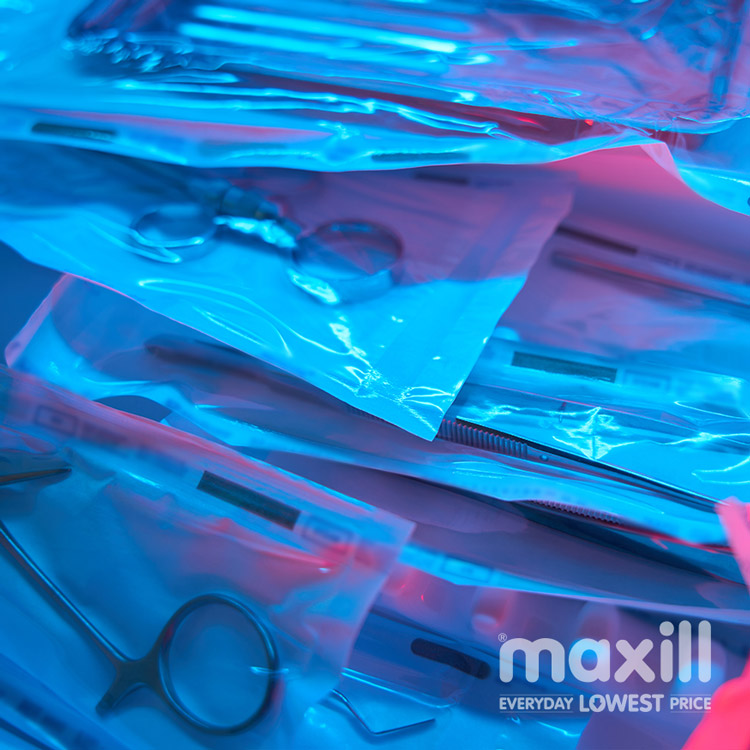
Quarantining instruments after sterilization is an important safeguard in dental practice. Holding instruments until sterilization monitoring results are available, especially biological indicator results, helps prevent the premature release of a failed load.
However, quarantine on its own is not an instrument traceability system. It is one part of a larger system.
Quarantine answers one question: Can this sterilization load be released?
Traceability answers a broader and more defensible question:
Can we prove which instruments were used, on which patient, from which sterilizer and load?
That distinction matters.
Quarantine Is a Release-Control Step
Quarantine is a holding process. It keeps instruments
-
Posted: July 01, 2026
 Read more »
Running a dental practice takes more than strong clinical skills, it requires effective communication. From the front desk to the operatory, the way we talk with each other can either build trust and efficiency or create unnecessary tension. One communication style that empowers both leaders and team members is solution-based communication.
What is Solution-Based Communication?
Solution-based communication is a way of speaking and listening that focuses on outcomes and collaboration, rather than blame or dwelling on problems. Instead of pointing fingers or getting stuck on what went wrong, the conversation turns toward what can be done to improve the situation.
Think of it as shifting from:
“Why did this go wrong?”
to
“How can we make this work better next time?”Why It Matters in a Dental Office
Dental teams are unique: hygienists, assistants, dentists, and administrators