maxill's Dental Blog
-
May 17, 2024
As healthcare professionals, we are no strangers to the demands of our jobs. Long hours, high-stress environments, and the pressure to deliver exceptional patient care can take a toll on our mental well-being. However, May is Mental Health Awareness month, and it's crucial that we prioritize our mental health and well-being to maintain our own resilience and provide the best care possible for our patients.
Recognizing the Mental Health Challenges in Healthcare
The healthcare profession is known for its high-stress environment, which can lead to anxiety, depression, and burnout. Long hours, demanding patients, and the constant pressure to perform at a high level can contribute to these issues. For example, the
-
April 12, 2024
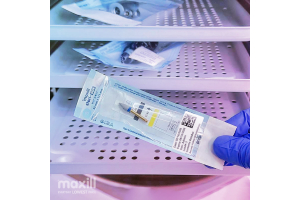
Bacterial Filtration Efficiency (BFE) is a measure used to evaluate the effectiveness of material at filtering out bacteria from a liquid or aerosolized solution. It’s often used in the context of healthcare settings, including dental offices, to assess the performance of sterilization wraps.
In dental offices, Infection Prevention and Control (IPAC) protocols are critical for maintaining a safe and sterile environment for patients and staff. Sterilization wraps are used to cover instruments and equipment to prevent contamination and ensure the remain sterile until use.
The BFE of sterilization wraps indicates how well the material can filter out bacteria, which is crucial for preventing the transmission of infectious agents during dental procedures. Higher BFE values signify better filtration efficiency, meaning the wrap is more effective at preventing bacterial contamination.
-
April 05, 2024
Spaulding’s classifications are a system used to categorize medical devices and equipment based on the risk of infection associated with their use. This system was created by Dr. Earle H. Spaulding in the mid-20th century and has since become a standard in healthcare settings, including dental offices. There are three main classifications in the Spaulding system: critical, semi-critical, and non-critical.
Critical items are those that come into contact with sterile tissue or the vascular system, posing the highest risk of infection if contaminated. In a dental office, critical items may include surgical instruments like scalpels and forceps. These items must be sterilized after each use to eliminate any potential pathogens.
Semi-critical items are those that come into contact with mucous membranes or non-intact skin but d
-
March 29, 2024
Dental is a fundamental procedure in oral healthcare, essential for maintaining optimal dental hygiene and preventing oral diseases. Among the various tools and techniques employed in dental debridement, two prominent methods stand out: magnetostrictive scalers, and piezoelectric scalers. Understanding the differences between these two ultrasonic scalers is crucial for dental professionals to make informed decisions about their clinical practices and provide the best possible care for their patients.
Magnetostrictive scalers and piezoelectric scalers operate on distinct principles, each offering unique advantages and drawbacks. In this comprehensive comparison, we dive a little deeper into the intricacies of these two methods, exploring their mechanisms of action, applications, and the highlights and challenges associated with each.
As we embark on this exploration,
-
February 16, 2024
Infection control in dentistry is critical to ensuring dental practitioners' and patients' health and safety. With the rise of infectious diseases and the need for stringent practices to prevent their spread, compliance with infection control protocols is of utmost importance in the dental industry. However, achieving full compliance can be challenging, as healthcare providers may demonstrate the Hawthorne effect, impacting their behavior and adherence to recommended guidelines. This article explores the concept of the Hawthorne effect in relation to infection control in dentistry and discusses strategies to ensure effective compliance.
The Hawthorne effect, initially discovered through a series of studies in the 1920s and 1930s at the Western Electric Hawthorne Works in Chicago, refers to the phenomenon where people modify their behavior due to the awareness or perception of being observed. In the context of infection control
-
December 22, 2023
Enzymatic cleaners are fundamental assets within dental practices, offering a targeted and efficient solution for the removal of organic residues from instruments used in various procedures. Their mechanism of action, controlled through specific enzymes, ensures a thorough cleaning process that goes beyond what conventional cleaners can achieve. In dentistry, these cleaners play a pivotal role in upholding strict hygiene standards, minimizing contamination risks, and prolonging the lifespan of essential instruments and equipment.
Enzymatic Action and Specific Enzymes:
Enzymatic cleaners employ a diverse range of enzymes, each tailored to break down specific organic compounds present on dental instruments.
-
December 08, 2023
Dentistry has evolved significantly, introducing innovative equipment and techniques to elevate patient care. Among these developments, dental ultrasonic scalers stand out as an important device in maintaining oral hygiene. As we discuss the history, science and application, we’ll discover the wealth of benefits these high-tech devices in modern dentistry can provide.
History of Ultrasonic Scalers:
The introduction of dental ultrasonic scalers dates to the mid-20th century when technological innovations started revolutionizing dental practices. An American periodontist introduced the first ultrasonic device in the 1950s, pioneering the use of ultrasonic vibrations for calculus removal. Since then, advancements in materials, technology, and design have enhanced these devices, making them a vital a
-
December 01, 2023
Unraveling the Protective Layers for First Responders
In the unyielding battle against the fentanyl epidemic, the protection of our first responders hinges on the reliability of their gear. Within this arsenal, chemotherapy tested nitrile gloves have emerged as a formidable defense against fentanyl exposure. This article dives into the intricate processes and standards that define the fentanyl protection capabilities of these gloves.
Understanding the Fentanyl Challenge
Fentanyl, notorious for its potency, being 50-100 times more potent than morphine, and 30-50 times more potent than heroin, demands specialized protective measures. Chemotherapy tested nitrile gloves go beyond conventional options, offering a robust defense against this formidable adversary. But how are these gloves rigorously tested to ensure
-
November 24, 2023
PPE stands for Personal Protective Equipment. It refers to any equipment or clothing specifically designed to be worn or used by individuals to protect themselves from potential hazards, risks, or injuries in the workplace or other environments.
-
October 13, 2023
Let's talk about it!
When we think about oral health, we often limit our concerns to our teeth and gums. However, emerging research has shed light on the profound impact of periodontal disease, commonly known as gum disease, on our overall well-being. It turns out that this seemingly isolated oral condition is intricately linked to several other diseases and conditions throughout the body.
Understanding Periodontal Disease...
Before we dive into the connections, let's briefly explore what periodontal disease is. It's a chronic inflammatory condition of the gums and supporting structures of the teeth, typically caused by the accumulation of plaque and bacteria.
In its early stages, it might manifest as gingivitis, which is characterized by redness, swelling, and