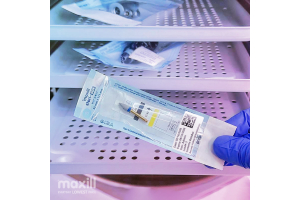
When IPAC Standards Don’t Spell It Out: Why Dental Professionals Must Use Clinical Judgement in IPAC, Especially With Labelling and Traceability

In dentistry, many clinicians still fall into a dangerous trap:
“If my regulatory body didn’t explicitly say to do it, then I don’t have to do it.”
This mindset shows up most often with instrument package labelling, documentation, chart entries, and sterilization traceability. Some clinicians insist:
- “My IPAC guideline doesn’t say I must label packages.”
- “It doesn’t specifically say to write sterilization data in the patient chart.”
- “It doesn’t use the exact words ‘track’ or ‘trace,’ so why should I?”
But here’s the truth, just because your regulator doesn’t list every micro-step does NOT mean you are exempt from performing it. Your responsibility is to use professional judgement and follow recognized IPAC standards to protect patient safety. Let’s explore why.
Regulatory Bodies Cannot Write a Step-by-Step Manual for Every Clinic
No regulator knows:
- Your equipment models
- Your workflow
- Your space limitations
- Your staffing levels
- Your sterilization load patterns
- Your documentation systems
- Your patient volume
- Your process risks
Because every practice is different, regulators cannot write, for example, “Step 1: Put this exact label, in this exact place, with these exact words.” Instead, they provide expectations, principles and outcome requirements. It is then your professional responsibility to interpret those expectations and apply them to your environment, to your equipment, to your workflows.
IPAC Standards Are Designed Around Evidence, Not Detailed Procedural Steps
Many dental professionals misunderstand why IPAC standards are written the way they are. IPAC standards do not include 600 pages of “do this exact step in this exact order” because:
- They must apply to thousands of different device models
- Technology changes faster than a guideline can be updated
- Clinical judgement must be flexible
- Rigid checklists would fail complex situations
- Professionals must understand why the process matters, not just follow a script
IPAC standards describe what must be achieved, not every tiny action required to achieve it. This is why terms like “traceability,” “documentation,” “lot control,” “package identification,” “sterility assurance,” and “recall readiness” appear throughout IPAC standards, but not always with a step-by-step labeling tutorial.
If a Regulator Doesn’t Explicitly Say “Label Packages,” Does That Mean You Shouldn’t?
Let’s examine this logically. Imagine a sterilization load fails. A BI shows growth. A recall must be initiated. If your packages are not labelled:
- Can you identify which patients were affected?
- Can you determine which load each instrument came from?
- Can you prove sterility for a specific appointment?
- Can you defend yourself in a complaint or legal case?
No. Lack of labeling = no traceability = compromised patient safety. This is the exact outcome IPAC standards expect you to prevent. So while your regulator may not say: “Label your packages with clinic name, date, load number, cycle number, and kit ID,” …they do expect you to:
- Prevent harm
- Demonstrate due diligence
- Meet sterility assurance requirements
- Show documentation
- Participate in recall readiness
- Track instrument history
And this cannot be accomplished without labeling.
“Track and Trace” Is an Obligation, Even If the Words Aren’t Printed in Your Guideline
Some dental regulators do not use the exact phrases:
- “Track and trace”
- “Instrument-level traceability”
- “Chain of custody”
- “Cycle-to-patient link”
But the obligation still exists under broader principles of:
- Patient safety
- Documentation
- Accountability
- Infection prevention
- Risk management
- Recall ability
If you cannot trace an instrument back to a load, and that load fails, then patient safety has been compromised, which is the very thing regulatory bodies expect you to prevent.
Professional Judgement Means Choosing the Safest Option, Not the Minimal One
Some clinicians misinterpret “professional judgement” as permission to do less.
In reality: Professional judgement requires you to choose the safest option that protects the patient, not the most convenient one for the clinic. When in doubt, you must default to:
- The higher standard
- The evidence-based practice
- The option that supports traceability
- The process that prevents patient harm
If labelling packages enhances traceability, supports recalls, and protects patients, then professional judgement requires you to do it.
Regulators Trust You to Make Informed Decisions, Not to Do the Bare Minimum
Regulators set expectations. They do not supervise your sterilization area. They do not monitor every load. They do not label your instruments for you. They do not follow you into the clinic.
You are the professional.
You are accountable.
You make the decisions that must protect the public.
If your regulator hasn’t written “label packages like this,” it is because:
- The requirement is self-evident in achieving traceability
- They expect you to understand sterilization science
- They expect you to apply IPAC standards
- They expect you to protect patients without being micromanaged
This is what it means to be a regulated health professional.
Labelling Is One Example, But the Principle Applies Everywhere in IPAC
The same reasoning applies to:
- BI/PCD usage
- Type V internal indicators
- Charting sterilization data
- Logging mechanical parameters
- Recall protocols
- Requalification of sterilizers
- Transport containers
- Pre-cleaning requirements
- Waterline testing
- PPE and engineering controls
- Environmental cleaning … and the list goes on!
If a step is necessary to achieve sterility assurance, documentation, or patient protection, then you must do it, regardless of whether your college prints the exact wording. If your regulator doesn’t explicitly say you must do it, but it protects the patient, then the answer is YES, you must. If the step improves safety, protects the patient, prevents recalls, supports documentation, or aligns with national standards, then professional judgement requires that you do it. That is what it means to practise dentistry responsibly to protect the public and safeguard your dental office.

Michelle Aubé (Simmonds) RDH, maxill Dental Hygiene Educator
Michelle is a Dental Hygiene Speaker, Consultant and Educator with over 30 years of experience as a RDH and 4 years as a CDA. She is a professor and curriculum writer at Fanshawe College in both the dental hygiene and continuing education program sharing her knowledge in IPAC, professional practice, periodontal classification, social justice, advocacy and clinical applications. She is maxill's CE and IPAC Director and wears various IPAC hats including auditing federal correctional facilities dental clinics for IPAC standards. Michelle is ODHA's Regional Board Director and authors articles for CDHA's OH Canada professional publication and continues to practice clinically in London ON. She is a CDHO IPAC Remedial Facilitator and IPAC Expert Opinion. Her strong ethics has allowed her to serve on the Discipline Committee at Algonquin College and hold the position of a CDHO Quality Assurance Assessor for 7 years. As a lifelong learner she is completing a BA in Adult Education at Brock University. Her diverse dental background and current status as a practicing RDH offer a fulsome and realistic view of dental-related topics. As a passionate champion for the profession, she advocates for equity, professional autonomy, and systemic change, true grassroots leadership at its finest.
Michelle can be reached at [email protected]
Thanks for reading our latest blog article! If you've got a topic you'd like to see us tackle next, please submit your suggestion to our blog writing team of dental professionals at [email protected].