

Infection Control
-
April 12, 2024
Bacterial Filtration Efficiency (BFE) is a measure used to evaluate the effectiveness of material at filtering out bacteria from a liquid or aerosolized solution. It’s often used in the context of healthcare settings, including dental offices, to assess the performance of sterilization wraps.
In dental offices, Infection Prevention and Control (IPAC) protocols are critical for maintaining a safe and sterile environment for patients and staff. Sterilization wraps are used to cover instruments and equipment to prevent contamination and ensure the remain sterile until use.
The BFE of sterilization wraps indicates how well the material can filter out bacteria, which is crucial for preventing the transmission of infectious agents during dental procedures. Higher BFE values signify better filtration efficiency, meaning the wrap is more effective at preventing bacterial contamination.
-
April 05, 2024
Spaulding’s classifications are a system used to categorize medical devices and equipment based on the risk of infection associated with their use. This system was created by Dr. Earle H. Spaulding in the mid-20th century and has since become a standard in healthcare settings, including dental offices. There are three main classifications in the Spaulding system: critical, semi-critical, and non-critical.
Critical items are those that come into contact with sterile tissue or the vascular system, posing the highest risk of infection if contaminated. In a dental office, critical items may include surgical instruments like scalpels and forceps. These items must be sterilized after each use to eliminate any potential pathogens.
Semi-critical items are those that come into contact with mucous membranes or non-intact skin but d
-
March 25, 2024
In healthcare facilities, meticulous attention to detail is paramount to ensure patient safety and uphold infection prevention and control (IPAC) standards. Among the myriad of considerations, selecting the appropriate size sterilization pouches might seem like a minor aspect, yet its significance cannot be overstated. Proper sizing not only ensures the effectiveness of sterilization processes but also plays a pivotal role in IPAC compliance and operations optimization within healthcare facilities. Let's explore key factors to look for in a sterilization pouch, review the importance of choosing the proper sizes, and why it is crucial for maintaining stringent IPAC protocols.
Understanding Sterilization Pouches
Sterilization pouches serve as a crucial barrier system designed to maintain the sterility of medical or dental instruments and equipment until they
-
March 15, 2024
Face masks have become a common sight for the human population, especially since the Covid-19 global pandemic hit in 2020. At the beginning of the pandemic, public health agencies were hesitant to recommend the consistent use of face masks. The general public was also uncertain of what to believe. To mask or not to mask, this was the question. However, after the World Health Organization acknowledged that the virus could be airborne and linger in the air for hours, masking as a weapon against the coronavirus became a preventive measure to keep virus transmission in check. It was not unusual to see face masks hanging from every car rearview mirror, offered at the entrance to every business, or mandated at every work environment. Face coverings became a fashion statement when people made cloth face coverings in many styles and fabrics. This cloth covering was acceptable for the general public and is considered a form of universal source control.
-
February 16, 2024
Infection control in dentistry is critical to ensuring dental practitioners' and patients' health and safety. With the rise of infectious diseases and the need for stringent practices to prevent their spread, compliance with infection control protocols is of utmost importance in the dental industry. However, achieving full compliance can be challenging, as healthcare providers may demonstrate the Hawthorne effect, impacting their behavior and adherence to recommended guidelines. This article explores the concept of the Hawthorne effect in relation to infection control in dentistry and discusses strategies to ensure effective compliance.
The Hawthorne effect, initially discovered through a series of studies in the 1920s and 1930s at the Western Electric Hawthorne Works in Chicago, refers to the phenomenon where people modify their behavior due to the awareness or perception of being observed. In the context of infection control
-
January 12, 2024
Dental handpieces are a dental office's most essential and costly investment. Handpieces are the workhorses of the practice. Whether high-speed, low-speed, or cordless, handpieces are considered semi-critical dental devices that must be reprocessed appropriately to avoid harming the device, causing it to operate ineffectively, or reducing its productive life while maintaining sterility.
Dental handpieces contact mucous membranes and oral fluids. These instruments have not been associated with disease transmission at this time; however, high-speed and low-speed handpieces can retract oral fluids into the internal workings of the handpiece. DNA of viruses has been found inside both highspeed handpieces and prophy angles. If not cleaned and sterilized correctly, this debris could later be transferred to the mouths of other patients.
Handpiece Life
-
December 22, 2023
Enzymatic cleaners are fundamental assets within dental practices, offering a targeted and efficient solution for the removal of organic residues from instruments used in various procedures. Their mechanism of action, controlled through specific enzymes, ensures a thorough cleaning process that goes beyond what conventional cleaners can achieve. In dentistry, these cleaners play a pivotal role in upholding strict hygiene standards, minimizing contamination risks, and prolonging the lifespan of essential instruments and equipment.
Enzymatic Action and Specific Enzymes:
Enzymatic cleaners employ a diverse range of enzymes, each tailored to break down specific organic compounds present on dental instruments.
-
December 08, 2023
Maintaining a clean and safe environment in a dental office is of utmost importance. One area that often is overlooked, yet plays a crucial role in ensuring patient safety is dental unit waterlines.
Dental unit waterlines, or DUWLs, can harbor harmful bacteria that pose a risk to dental staff and patients. This article will explore the importance of dental unit waterline maintenance and discuss the Centers for Disease Control (CDC) and American Dental Association (ADA) recommendations for best practices for ensuring optimal patient safety.
Whether you are a dental professional or a patient seeking dental care, understanding the significance of proper waterline maintenance is essential for a healthy and safe dental experience. So, let’s dive in and explore the world of dental unit waterlines and the best practices to keep them clean and safe.
-
December 01, 2023
Unraveling the Protective Layers for First Responders
In the unyielding battle against the fentanyl epidemic, the protection of our first responders hinges on the reliability of their gear. Within this arsenal, chemotherapy tested nitrile gloves have emerged as a formidable defense against fentanyl exposure. This article dives into the intricate processes and standards that define the fentanyl protection capabilities of these gloves.
Understanding the Fentanyl Challenge
Fentanyl, notorious for its potency, being 50-100 times more potent than morphine, and 30-50 times more potent than heroin, demands specialized protective measures. Chemotherapy tested nitrile gloves go beyond conventional options, offering a robust defense against this formidable adversary. But how are these gloves rigorously tested to ensure
-
November 24, 2023
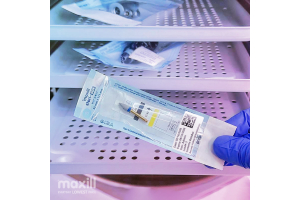
maxill is proud to introduce the ‘new guy’ in the IPAC line up of products… The Process Challenge Device (PCD). A PCD is a key element in the quality assurance testing of dental office sterilizers. It is used to monitor the performance of the sterilization process. The PCD simulates an equal or greater challenge than the most difficult instrument/item routinely processed in a sterilization cycle. Each day and each cycle used requires the use of a PCD. Adding a more rigorous approach to testing follows best practice within the risk management of the theory of routine practice principles of infection prevention and control.