
Why the Foil Test No Longer Meets Today’s Ultrasonic Testing Standards
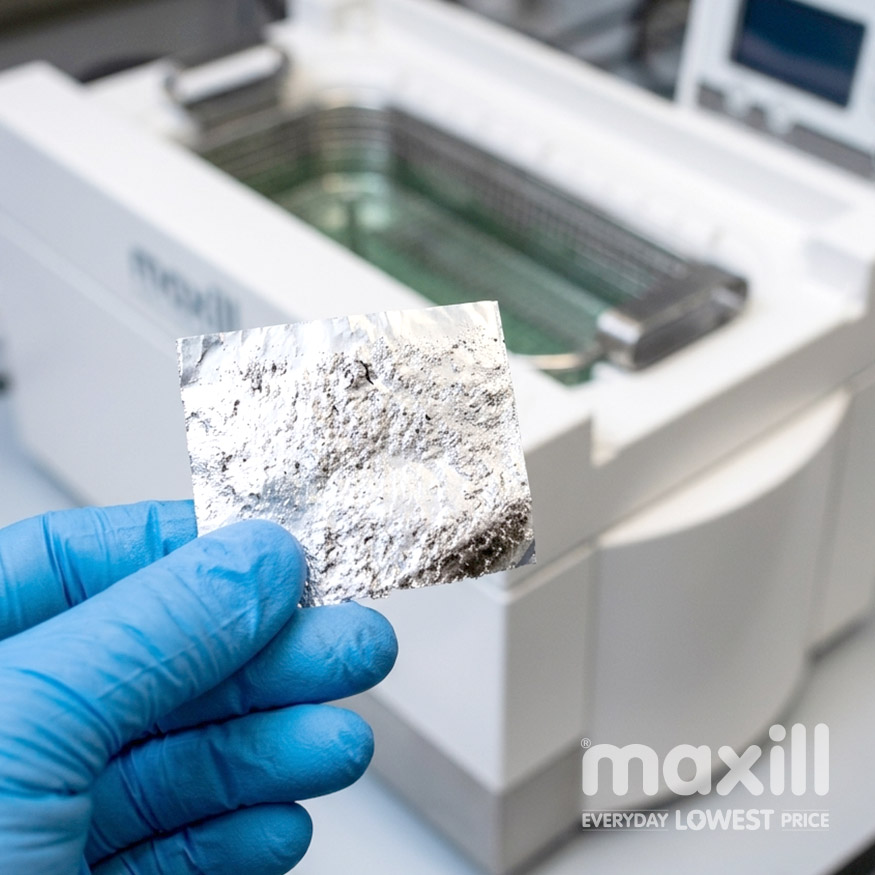
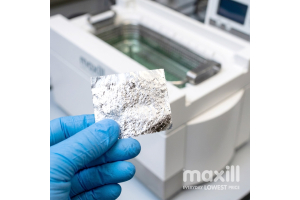
For many years, dental offices have used the foil test as a simple way to check whether an ultrasonic bath was producing cavitation. The process was familiar: place a piece of foil into the ultrasonic cleaner, run the cycle, and look for pitting, marks, or perforations in the foil as a sign that the unit was functioning.
However, current Canadian reprocessing standards have moved beyond this method.
As outlined in CAN/CSA-Z314:23, Canadian Medical Device Reprocessing in All Healthcare Settings, under Clause 11: Decontamination of reusable medical devices, ultrasonic cleaners shall be tested using commercial methods that verify cleaning and functionality daily when the ultrasonic cleaner is used. The standard also notes that foil testing is not a validated testing method. Test results must be documented, and both the test MIFU and ultrasonic cleaner MIFU must be followed for appropriate testing protocols.
This is an important shift for dental offices.
The concern with the foil test is that it may show some level of cavitation, but it does not reliably verify that the ultrasonic cleaner is providing effective cleaning performance. In other words, a piece of foil may become pitted or marked, but that does not necessarily mean the ultrasonic bath is meeting the level of performance required to support the safe reprocessing of reusable dental instruments.
Another challenge is that, even when offices were using the foil test, many were not performing it correctly. A proper foil test was not intended to be done by simply dropping a piece of foil into the bottom of the ultrasonic bath. The traditional method required several strips of foil to be suspended vertically in different areas of the bath. This was often done by creating a pie-lattice pattern across the top of the ultrasonic bath with autoclave tape to hold the suspended strips, or by using a bent metal hanger or similar holder to suspend several strips of foil into the solution.
In practice, many offices simply placed or tossed a piece of foil into the bath and then looked for pitting where the foil happened to land. This only assessed activity at the base of the bath, or in the limited area where the foil settled. It did not provide meaningful information about ultrasonic activity throughout the bath, including the corners, edges, and different zones where instruments may be placed during cleaning.
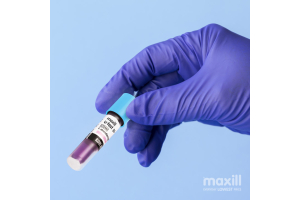
This is where commercial ultrasonic cleaning indicators offer a more consistent and defensible approach. A quality cleaning indicator is designed to suspend chemically engineered ink indicators in the ultrasonic bath so activity can be assessed from several directions. This helps capture ultrasonic performance in multiple areas of the bath, not just the middle, the base, or the spot where the indicator happens to land.
This is also where dental offices may face a real IPAC challenge. Some ultrasonic cleaner manufacturer instructions for use have not been updated to reflect current Canadian standards. In some cases, the MIFU may still identify the foil test as the recommended method for cavitation testing or quality assurance testing.
Another layer of complexity is that many ultrasonic cleaner MIFUs originate from manufacturers outside of Canada, often from the United States. As a result, the MIFU may not reflect Canadian reprocessing standards such as CAN/CSA-Z314. This can create a gap between what the manufacturer’s document states and what Canadian healthcare settings are expected to follow.
When this gap exists, the dental office should not rely on foil testing alone as evidence of ultrasonic cleaning performance. Instead, the office should apply a risk-based and defensible approach. This includes contacting the manufacturer for updated written guidance, documenting the communication, and implementing a validated commercial ultrasonic test method that aligns with the current Canadian standard.
The MIFU remains an essential document. It tells the office how the device is intended to be used, maintained, and tested. However, a MIFU may not always reflect the most current Canadian standard of practice, especially when the document was developed for another jurisdiction. In these situations, dental offices must recognize the difference between older manufacturer guidance and current Canadian reprocessing expectations.
The shift away from foil testing is not about making IPAC more complicated. It is about strengthening quality assurance, improving documentation, and ensuring that ultrasonic cleaners are tested in a way that is consistent, validated, and defensible.
In short, the foil test belongs to the past. Current Canadian standards require a commercial method that verifies cleaning and functionality, daily documentation when the ultrasonic cleaner is used, and alignment with both the testing product instructions and the ultrasonic cleaner MIFU. When the MIFU and the Canadian standard do not align, the office should seek written manufacturer clarification and follow the higher, current, and more defensible standard expected in Canadian healthcare settings.

Michelle Aubé (Simmonds) RDH, maxill Dental Hygiene Educator
Michelle is a Dental Hygiene Speaker, Consultant and Educator with over 30 years of experience as a RDH and 4 years as a CDA. She is a professor and curriculum writer at Fanshawe College in both the dental hygiene and continuing education program sharing her knowledge in IPAC, professional practice, periodontal classification, social justice, advocacy and clinical applications. She is maxill's CE and IPAC Director and wears various IPAC hats including auditing federal correctional facilities dental clinics for IPAC standards. Michelle is ODHA's Regional Board Director and authors articles for CDHA's OH Canada professional publication and continues to practice clinically in London ON. She is a CDHO IPAC Remedial Facilitator and IPAC Expert Opinion. Her strong ethics has allowed her to serve on the Discipline Committee at Algonquin College and hold the position of a CDHO Quality Assurance Assessor for 7 years. As a lifelong learner she is completing a BA in Adult Education at Brock University. Her diverse dental background and current status as a practicing RDH offer a fulsome and realistic view of dental-related topics. As a passionate champion for the profession, she advocates for equity, professional autonomy, and systemic change, true grassroots leadership at its finest.
Michelle can be reached at [email protected]
Thanks for reading our latest blog article! If you've got a topic you'd like to see us tackle next, please submit your suggestion to our blog writing team of dental professionals at [email protected].