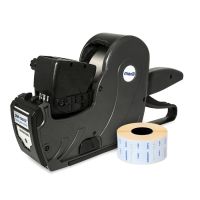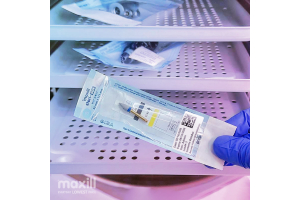


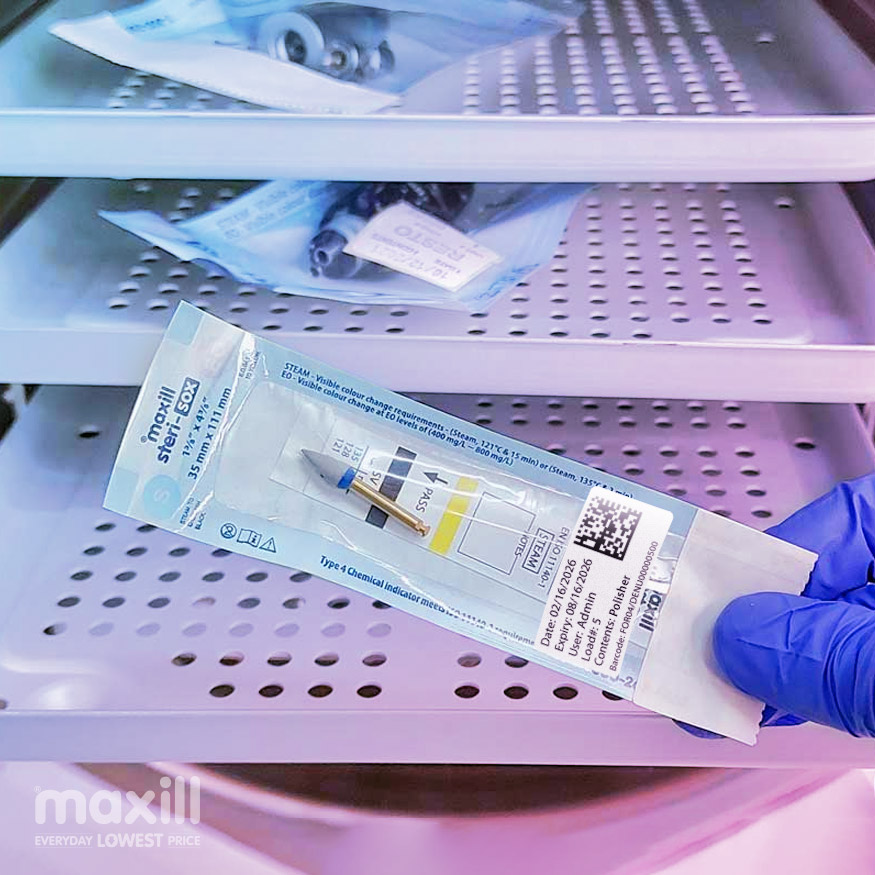
Package Labelling Occurs PRIOR to Sterilization
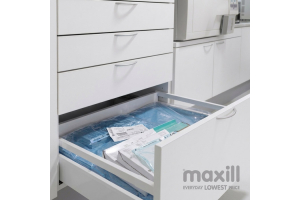
Instrument reprocessing is intended to follow a linear, one-way workflow. The process moves from contaminated to clean, then inspected, packaged, labelled, sterilized, cooled, inspected again, and stored. Each step prepares the item for the next step, and the workflow should not move backward once the item has progressed forward.
For this reason, labelling belongs before sterilization. The label is part of packaging and load preparation. It connects the package to the sterilization record, including the date processed, sterilizer used, load or cycle information, and the individual responsible for packaging. Once the package has been sterilized, the focus is no longer to “work on” the package; it is to protect the sterile barrier, allow the package to cool, inspect it, and store it appropriately.
The expected workflow is:
It is not:
In Ontario, RCDSO implies that labelling is to occur before sterilization by requiring packages to be labelled with the date reprocessed, sterilizer used, cycle or load number, and the OHCW’s initials, and by stating that labels, chemical indicator tapes, and inks must remain legible after exposure to the sterilization process. This supports that the label is intended to be on the package before the sterilization cycle occurs.
CDHO, however, states this expectation explicitly. On page 23 of the CDHO IPAC Guidelines (2024), under preparing and packaging of reusable dental instruments/devices, it states: “Each package must be labelled before sterilization with the date processed, sterilizer used, cycle or load number, and initials of the RDH who packaged the instruments.”
Public Health Ontario (2019) also supports this sequence through its dental reprocessing checklist. While PHO may not use the exact phrase “label before sterilization,” the checklist places package labelling before packaged devices are placed in the sterilizer. In the PHO IPAC Checklist for Dental Practice: Reprocessing of Dental/Medical Equipment/Devices (2019), item 7.8 states that each package is labelled with the date processed, sterilizer used, cycle or load number, and the health care provider’s initials. The checklist then moves to item 7.10, where packaged dental/medical equipment/devices are placed in the sterilizer according to the sterilizer’s MIFU.
From a risk-management perspective, labelling after sterilization creates gaps in traceability and defensibility. If the label is added after the cycle is complete, the office is trying to reconstruct the traceability record after the fact. This can create uncertainty about whether the correct package was linked to the correct sterilizer, cycle/load number, date, monitoring results, and operator. If there is a failed BI, failed CI, failed physical parameter, or recall event, weak or after-the-fact labelling can compromise the ability to confidently identify which instruments were in which load and which clients may have been affected.
Labelling after sterilization also creates additional handling of a processed sterile package. Once sterilized, the package should be cooled, inspected, protected, and stored. Additional manipulation to apply a label introduces avoidable risk to package integrity, seal integrity, and the sterile barrier system.
There is also an important evidence-based decision-making issue. The discussion about labelling after sterilization is often attached to products and trying to fit a product into practice where the label does not have heat-tolerant adhesive or is not intended to go through the sterilization process. That is not the goal of evidence-based decision making. A product should not influence the one-way workflow in a way that causes the practice to adapt the workflow away from accepted IPAC principles.
In other words, we should not adapt the one-way workflow to accommodate a label product. We should select products that support the one-way workflow. If the product cannot tolerate the sterilization process, the answer is not to move labelling after sterilization. The answer is to choose a validated labelling method or product that supports labelling before sterilization, maintains legibility after exposure to the sterilization process, and does not compromise the packaging system.
Labelling is not an after-the-fact documentation step. It is part of packaging, traceability, and load preparation before sterilization.
Michelle Aube-Simmonds RDH
maxill IPAC and CE Director
References:
College of Dental Hygienists of Ontario. (2022). Infection prevention and control (IPAC) guidelines. https://cdho.org/cdho-resources/infection-prevention-and-control-ipac-guidelines/
College of Dental Surgeons of Alberta. (2023). Standard of practice: Infection prevention and control standards and risk management for dentistry. https://cdsab.ca/infection-prevention-and-control/
Public Health Ontario. (2019). IPAC checklist for dental practice: Reprocessing of dental/medical equipment/devices. https://www.publichealthontario.ca/-/media/documents/c/2019/checklist-ipac-dental-reprocessing.pdf
Royal College of Dental Surgeons of Ontario. (2018). Standard of practice: Infection prevention and control in the dental office. https://www.rcdso.org/en-ca/standards-guidelines-resources/standards-guidelines-advisories/infection-prevention-and-control

Michelle Aubé (Simmonds) RDH, maxill Dental Hygiene Educator
Michelle is a Dental Hygiene Speaker, Consultant and Educator with over 30 years of experience as a RDH and 4 years as a CDA. She is a professor and curriculum writer at Fanshawe College in both the dental hygiene and continuing education program sharing her knowledge in IPAC, professional practice, periodontal classification, social justice, advocacy and clinical applications. She is maxill's CE and IPAC Director and wears various IPAC hats including auditing federal correctional facilities dental clinics for IPAC standards. Michelle is ODHA's Regional Board Director and authors articles for CDHA's OH Canada professional publication and continues to practice clinically in London ON. She is a CDHO IPAC Remedial Facilitator and IPAC Expert Opinion. Her strong ethics has allowed her to serve on the Discipline Committee at Algonquin College and hold the position of a CDHO Quality Assurance Assessor for 7 years. As a lifelong learner she is completing a BA in Adult Education at Brock University. Her diverse dental background and current status as a practicing RDH offer a fulsome and realistic view of dental-related topics. As a passionate champion for the profession, she advocates for equity, professional autonomy, and systemic change, true grassroots leadership at its finest.
Michelle can be reached at [email protected]
Thanks for reading our latest blog article! If you've got a topic you'd like to see us tackle next, please submit your suggestion to our blog writing team of dental professionals at [email protected].