
Wait… Extracted Teeth Aren’t Biohazard Waste?! So What Actually Is Biomedical Waste in a Dental Office?
If you've ever paused mid-procedure and thought:
"This is literally a human body part... how is this NOT biohazard waste?" You're not alone. One of the most misunderstood areas in dental Infection Prevention and Control (IPAC) is biomedical waste classification, especially when it comes to extracted teeth. Let's clear it up.
First: What Is Biomedical Waste?
According to the Centre for Disease Control and dental regulatory bodies, biomedical waste is classified as hazardous waste and must:
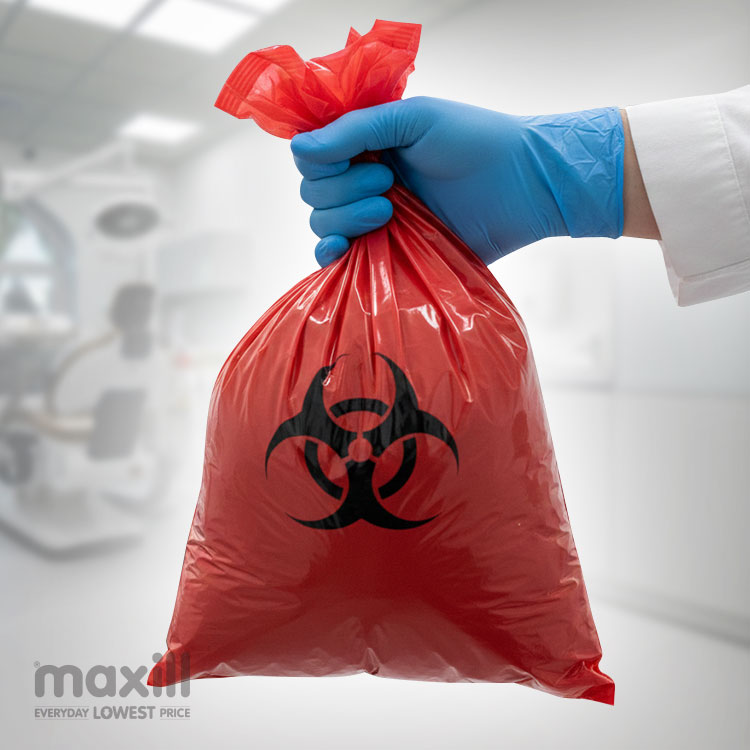
- Be stored in colour-coded containers with the universal biohazard symbol
- Be released to an approved biomedical waste carrier
However, that does NOT include all waste.
Biomedical waste falls into two categories:
1. Anatomical Waste (Human Tissue)
This includes:
- Surgically removed tissue
- Biopsied lesions
- Harvested graft material
These must go into a RED biohazard liner bag and be managed through regulated biomedical waste disposal channels.
In dentistry, this is most commonly generated by:
- Oral surgeons
- Periodontists
- General dentists who perform advanced surgical procedures
2. Non-Anatomical Biomedical Waste
This includes:
Sharps
- Needles
- Syringes with needles attached
- Scalpel blades
- Endodontic files
- Broken clinical glass
- Broken scalers
- Ortho wires
- Toffelmire bands, etc.
These must go into a YELLOW puncture-resistant sharps container.
Blood-Soaked Materials
Only materials that release liquid or semi-liquid blood if compressed qualify.
Examples:
- Gauze dripping blood
- Surgical dressings saturated to the point of leakage
If it does not release liquid blood when compressed?
It is NOT biomedical waste.
So... Why Aren't Extracted Teeth Biomedical Waste?
Here's where it gets interesting. Extracted teeth are specifically excluded from biomedical waste classification under RCDSO guidance. Yes — even though they are human tissue.
Why? Because they are treated differently under waste management regulations.
Extracted Teeth: How They're Actually Classified
| Scenario | Disposal Method |
|---|---|
| Returned to patient | Clean visible blood/debris only |
| No amalgam and discarded | General office waste |
| With amalgam | Mercury-containing waste (environmental waste category) |
| Sent to lab | Clean and surface disinfect (low-level) |
| Used for pre-clinical education | Clean and keep hydrated in closed container |
So extracted teeth are handled based on environmental and mercury regulations, not biomedical waste regulations. It surprises almost everyone the first time they learn it.
What Is NOT Biomedical Waste (Even If It Looks Like it Should Be!)
This is where over-classification often happens.
The majority of waste generated in dentistry is considered general office waste, including:
- Exam gloves
- Masks
- Barriers
- Lightly blood-stained gauze and / or cotton rolls
- Saliva-soaked cotton rolls
- Patient bibs
If the item does not release liquid or semi-liquid blood when compressed, it does not qualify as biomedical waste.
Why This Distinction Matters
Over-disposing waste as biomedical:
- Increases office costs
- Increases environmental burden
- Creates unnecessary regulatory handling
Under-disposing waste incorrectly:
- Violates regulations
- Creates safety risk
- Exposes the office to liability
Knowing the difference is part of defensible practice.
A Simple Decision Guide for Your Team
Ask:
- Is it a sharp? Sharps container
- Is it surgically removed tissue? Red biohazard bag
- Does it release liquid blood when compressed? Yellow biohazard bag
- None of the above? General waste
Final Thought
IPAC isn't about reacting to what feels risky. It's about understanding what is regulated, why it's regulated, and applying professional judgment accordingly. And sometimes the thing that looks the most biohazardous in the room isn't classified that way at all.
References:
Centers for Disease Control and Prevention. (n.d.). Extracted teeth: Infection prevention and control FAQs for dentistry. U.S. Department of Health & Human Services. https://www.cdc.gov/dental-infection-control/hcp/dental-ipc-faqs/extracted-teeth.html
Canadian Council of Ministers of the Environment. (1992). Guidelines for the management of biomedical waste in Canada (Report No. CCME-EPC-WM-42E). Environment Canada. https://publications.gc.ca/collections/collection_2015/ec/En108-3-1-42-eng.pdf
New Brunswick Dental Society. (2025). New Brunswick dental infection prevention and control guide. https://www.nbdent.ca
Public Health Ontario. (2019). Infection prevention and control checklist for dental settings. https://www.publichealthontario.ca/-/media/documents/c/2019/checklist-ipac-dental-core.pdf
Royal College of Dental Surgeons of Ontario. (2022). Infection prevention and control in the dental office [Standard of Practice]. https://cdn.agilitycms.com/rcdso/pdf/ipac/RCDSO_5539_Standard%20of%20Practice_Infection%20Prevention%20and%20Control_v3_ACC.pdf

Michelle Aubé (Simmonds) RDH, maxill Dental Hygiene Educator
Michelle is a Dental Hygiene Speaker, Consultant and Educator with over 30 years of experience as a RDH and 4 years as a CDA. She is a professor and curriculum writer at Fanshawe College in both the dental hygiene and continuing education program sharing her knowledge in IPAC, professional practice, periodontal classification, social justice, advocacy and clinical applications. She is maxill's CE and IPAC Director and wears various IPAC hats including auditing federal correctional facilities dental clinics for IPAC standards. Michelle is ODHA's Regional Board Director and authors articles for CDHA's OH Canada professional publication and continues to practice clinically in London ON. She is a CDHO IPAC Remedial Facilitator and IPAC Expert Opinion. Her strong ethics has allowed her to serve on the Discipline Committee at Algonquin College and hold the position of a CDHO Quality Assurance Assessor for 7 years. As a lifelong learner she is completing a BA in Adult Education at Brock University. Her diverse dental background and current status as a practicing RDH offer a fulsome and realistic view of dental-related topics. As a passionate champion for the profession, she advocates for equity, professional autonomy, and systemic change, true grassroots leadership at its finest.
Michelle can be reached at [email protected]
Thanks for reading our latest blog article! If you've got a topic you'd like to see us tackle next, please submit your suggestion to our blog writing team of dental professionals at [email protected].