
Why Sterile Instruments Should Never Be Stored at Floor Level (Even in a Closed Drawer)
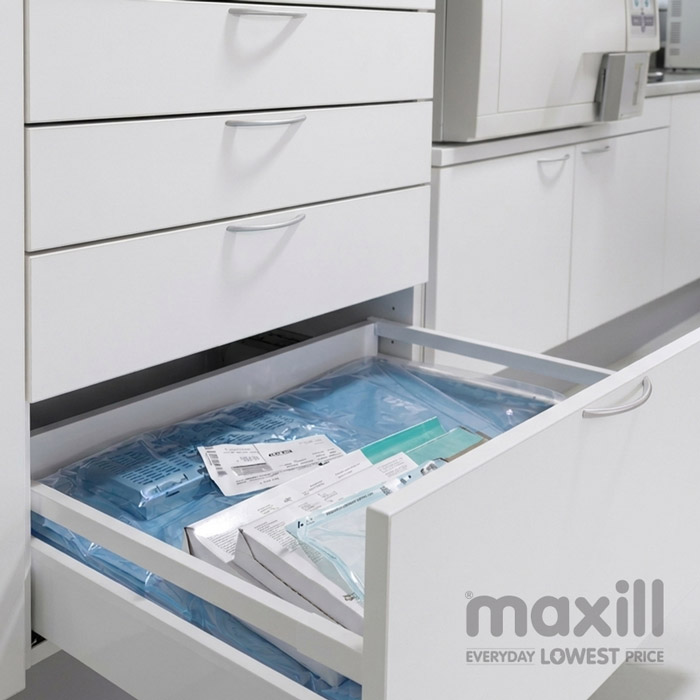
If you’ve ever walked into a sterilization area or supply room and noticed sterile instruments stored in the lowest drawer, bottom cabinet, or on a shelf near the floor, you’re not alone. This is one of the most common “it seems fine” storage habits in dental settings, especially when space is tight.
But here’s the truth… storing sterile instruments at ground level increases risk, even if the instruments are wrapped, even if they’re in a closed drawer, and even if they “aren’t technically touching the floor.” This isn’t just a rule for the sake of rules. It’s a practical, evidence-based risk reduction control that protects sterility, improves workflow, and reduces avoidable reprocessing. Let’s break it down.
The Simple Truth: The Floor Zone Is the Highest-Risk Zone
In every healthcare environment, including dental operatories and sterilization rooms, the floor is where contamination accumulates. That’s because the floor is constantly exposed to:
- foot traffic (shoes bring in contamination from everywhere)
- aerosols and dust that settle downward over time
- moisture events (mopping, spills, tracked-in rain/snow)
- debris and lint accumulation
- cleaning chemicals and residues
Even if your sterile instrument is inside a pouch, cassette wrap, or package, the outside surface of that packaging becomes part of your handling environment. The cleaner the storage zone, the safer and more reliable your sterile storage system becomes.
“But It’s in a Closed Drawer…” (Yes, and Here’s Why That Still Matters)
A closed drawer is better than open shelving, but drawer storage at floor level still carries preventable risks, including:
-
Moisture exposure risk
Floor-level areas are the most likely place for:
- mop splash
- wet floors
- leaks from nearby sinks or plumbing
- water tracking
Moisture can compromise packaging integrity through wicking and weaken barrier systems.
-
Impact and damage risk
Bottom drawers are frequently bumped by:
- carts
- feet/shoes
- cleaning equipment
- moving boxes or supplies
That increases the chance of micro-tears, seam stress, or packaging compromise—sometimes without visible damage.
-
Contamination transfer risk during handling
When sterile packs are stored low, staff are repeatedly:
- bending down
- pulling packages past dusty cabinet edges
- handling items more often to reach them
More handling = more opportunities for package damage or contamination transfer to hands/gloves.
-
The “junk drawer effect”
In many clinics, the lowest drawers and cabinets become “miscellaneous storage” zones:
- heavier items
- overflow supplies
- rarely used equipment
- items that get stacked, crushed, or shifted around
Sterile items should be stored where they’re protected—not where they’re most likely to be crowded or disturbed.
The Kitchen Analogy (The One Everyone Understands)
Think about your kitchen at home. Do you store your clean eating utensils, forks, spoons, knives, in the bottom drawer closest to the floor?
Usually no. That drawer is typically for:
- bulky items (bowls, trays, pots)
- miscellaneous tools
- items used less often
- heavier items you don’t want falling
Your clean utensils are stored higher because it’s:
- cleaner
- drier
- less exposed to dust and debris
- easier to keep protected
Sterile dental instruments are the “clinical utensils” used for patient care, except the consequences of contamination are much higher.
The Compliance Side: PHO and CDC Both Support “Off the Floor” Storage
This is not a preference. It’s consistent with recognized infection prevention guidance. Public Health Ontario states that sterile/clean instruments and supplies must be stored not at floor level and provides measurable minimum clearances for open shelving systems, including storage at least 25 cm (10 inches) off the floor (PHO, 2013).
This gives teams a clear benchmark for what “off the floor” means in practice.
The CDC similarly recommends that sterile supplies be stored far enough from the floor, commonly 8–10 inches, and away from sinks or areas where items could become wet (CDC, 2023).
When two major public health authorities in different countries align on the same principle, it reinforces the logic: floor-level storage is a preventable risk.
“Our Bottom Drawer Is 6 Inches Off the Ground. That Counts, Right?”
This is one of the most common responses, and it’s understandable.
But here’s the practical reality:
- 6 inches is still within the floor contamination and moisture zone
- It’s below the commonly cited “safe clearance” thresholds used in best-practice guidance
If your sterile storage location is only a few inches above the floor, it still behaves like floor-level storage from a risk perspective.
The Real Goal: Event-Related Sterility (and Fewer Reprocessing Headaches)
Modern infection prevention is based on event-related sterility, meaning sterile items remain sterile unless an event occurs that compromises them (e.g., moisture, puncture, tearing, crushing, contamination). Floor-level storage increases the chance of those events happening.
That leads to:
- more packages being considered compromised
- more reprocessing
- more time wasted
- more cost
- more staff frustration
- more uncertainty during audits
Raising sterile storage even slightly higher and keeping it in a controlled cabinet area reduces those events dramatically.
Final Takeaway
Storing sterile instruments off the floor is not about perfection, it’s about risk reduction.
Even if instruments are in a closed drawer, floor-level storage increases exposure to contamination, moisture events, and packaging damage. Raising storage height and keeping sterile items in a clean, protected zone strengthens sterility assurance, improves clinic confidence, and reduces avoidable reprocessing.
In infection prevention, small controls create big reliability, and this is one of the easiest improvements dental offices can make.
References:
Centers for Disease Control and Prevention. (2023, November 28). Sterilizing practices. U.S. Department of Health & Human Services. https://www.cdc.gov/infection-control/hcp/disinfection-sterilization/sterilizing-practices.html
Public Health Ontario. (2013). Best practices for cleaning, disinfection and sterilization of medical equipment/devices in all health care settings (3rd ed., p. 52). Queen’s Printer for Ontario. https://www.publichealthontario.ca/-/media/documents/B/2013/bp-cleaning-disinfection-sterilization-hcs.pdf

Michelle Aubé (Simmonds) RDH, maxill Dental Hygiene Educator
Michelle is a Dental Hygiene Speaker, Consultant and Educator with over 30 years of experience as a RDH and 4 years as a CDA. She is a professor and curriculum writer at Fanshawe College in both the dental hygiene and continuing education program sharing her knowledge in IPAC, professional practice, periodontal classification, social justice, advocacy and clinical applications. She is maxill's CE and IPAC Director and wears various IPAC hats including auditing federal correctional facilities dental clinics for IPAC standards. Michelle is ODHA's Regional Board Director and authors articles for CDHA's OH Canada professional publication and continues to practice clinically in London ON. She is a CDHO IPAC Remedial Facilitator and IPAC Expert Opinion. Her strong ethics has allowed her to serve on the Discipline Committee at Algonquin College and hold the position of a CDHO Quality Assurance Assessor for 7 years. As a lifelong learner she is completing a BA in Adult Education at Brock University. Her diverse dental background and current status as a practicing RDH offer a fulsome and realistic view of dental-related topics. As a passionate champion for the profession, she advocates for equity, professional autonomy, and systemic change, true grassroots leadership at its finest.
Michelle can be reached at [email protected]
Thanks for reading our latest blog article! If you've got a topic you'd like to see us tackle next, please submit your suggestion to our blog writing team of dental professionals at [email protected].